Saturday, January 21, 2017

Once Upon a Time...


Karen Thompson Walker: What fear can teach us

Read the transcript here.

Karen Thompson Walker compares human fears towards the components of stories.  All stories involve characters, plots, imagery, and suspense.  Our fears contain all of these aspects as well, in our fears we are the main character that goes through a sequence of suspense, that can create a vividly terrifying image in our imagination, and usually contain the questions of "what would happen?" and "what if?"  Its human nature to not only think about the future but also worry about it. Karen Thompson Walker also mentions the case of the whale ship Essex, in which the crew was swayed by the artistic rather than the scientific temperament.  When faced with the choice of possible cannibals and possible starvation, the crew decided against the idea that was most vivid to them, being eaten by cannibals, and chose the idea that appeared to be less vivid, slowly starving to death.  Finally she makes the point that truest fears that we can experience are the ones that are slow and subtle. 

The speaker, Karen Thompson Walker, tries to persuade her audience towards her way of thinking, that fears are nothing more than fictional stories, and can provide us with wisdom and insight about the truth.  She accomplishes this through her use of ethos, logos, and pathos in her speech.  

As a fictional writer, she uses her experience of writing her novel, The Age of Miracles, to how humans are able to think about the future, and how the future can bring up questions of fear.  Since she is an experienced writer, the audience believes her correlation between the components of stories and fears to be true.  The speaker also mentions famous novels like, The Origin of Species, Jane Eyre, and The Remembrance of Things Past to ensure her credibility as a well-educated, and successful author.  This use of ethos allows the audience to trust the speaker's perspective because of her credibility as an author, and persuades the audiences towards her purpose.

Aside from using famous novels and authors, Karen Thompson Walker references to the whale ship, Essex, throughout her speech.  The story of the ship and the crew inspired Herman Melville to write Moby Dick.  She uses direct quotes from Herman Melville and Vladimir Nabokov to support her support her purpose of reading our fears in a more scientific temperament than an artistic one.  Karen Thompson Walker also uses a study concerning "Productive Paranoia" to inform the audience that how they read, and studied the fear can help them prepare for their fears.  This use of logos successfully supports the speaker's claims and contributes to a more persuasive, and convincing argument in her favor.

The story of the Essex also allows the audience to sympathize for the crew members that were placed in the tragic situation.  Karen Thompson Walker adds to this emotional response form the audience by including a fear from her childhood, and including more common fears in her examples.  As a child she feared the earthquakes that happened in California, and was always worried that "the Big One might strike while we were sleeping."  The inclusion of her own fear makes the audience feel a personal connection with her, and creates a relatable, and sympathetic or empathetic mood in the audience.  While describing the relationship between stories and fears, she uses common fears like, flying on a plane as an example to create that further understanding and connection between herself and the audience.  The use of pathos in the speech allows this connection to reach the audience on a personal and emotional level that makes the speaker a relatable person.  Due to this, the author seems very passionate about her beliefs concerning the subject of fear, which further persuades the audience to her purpose.

I decided to analyze this talk because fear has been a big aspect of my life.  I have been questioning several things like, whether I'll get into my dream school or not, and where I'll attend college if I don't.  I really connected to the speaker's point that "the most nuanced stories in literature are often the richest, so too might our subtlest fears be the truest" because I agree that the worst fears that you can face are the fears that are unexpected or that move very slowly.  I also agreed with Karen Thompson Walker that how we read our fears determines what we can gain from them.

Sunday, January 8, 2017

Duality in Dr. Jekyll and Mr. Hyde

Characterization of Mr. Hyde:
"Mr. Utterson stepped out and touched him on the shoulder...he had unlocked the door and disappeared into the house." (Stevenson, 9-10)
Characterization of Dr. Jekyll:
"To this rule...This is a matter I thought we had agreed to drop." (Stevenson, 12-13)

Stevenson focuses on duality in this novella. He characterizes Mr. Hyde as an embodiment of pure evil through dark diction to not only describe Mr. Hyde's physical appearance, but also uses it in his dialogue. Dr. Jekyll is characterized as a well respected, prosperous doctor. These conflicting characters contribute to the overall mysterious tone of the novella. Mr. Hyde's dialogue is short and filled with cynical undertones, while Dr. Jekyll's dialogue is longer and well formulated. The development of the idea of duality in the novella, Jekyll states that that a human's soul is a battleground between 'good' and 'evil'. He hoped that the potion that he created would separate the good and the bad, but only brings out the bad through the character of Mr. Hyde.

Things Are Not Always What They Seem To Be
Dr. Jekyll: Surrounded by wealth and success, people think I'm grand.
Mr. Hyde: To the good doctor I am a helping hand.
Dr. Jekyll: The doors to the laboratory remain tightly shut.
Mr. Hyde: And I am the only one who holds the key.
Together: Things are not always what they seem to be.
Mr. Hyde: Mr. Utterson was his name, the one that interrogated me on the street.
Dr. Jekyll: Mr. Utterson came for a visit and questioned me about my assistant's past
Mr. Hyde: His eyes froze when he finally saw my face.
Dr. Jekyll: His eyes turned back to mine before he left the house.
Together: He is coming on to us, watching our every move.
Dr. Jekyll: Everyday is a fight between good and bad, I embrace the good,
Mr. Hyde: And I embrace the bad.
Dr. Jekyll: I can no longer control the potion's curse
Mr. Hyde: I have finally won.
Together: Things are not always what they seem to be.

Saturday, December 17, 2016

Top Picks for Lady Macbeth

"That '70s Show"- Set in Wisconsin in the 1970s,  revolving around a group of teenage friends, their mishaps, and their coming of age.  This show features two strong female characters, Donna and Jackie, have manipulated their men countless times.  Donna also preaches equality for women while she commonly breaks the stereotype of women during the time period.  The commonalities between Donna and Lady Macbeth is what would lead her to watch this show.  It reveals that now matter how strong and independent Lady Macbeth appears to be on the outside, she is fragile on the inside.

"Unbreakable Kimmy Schmidt"- A woman was kept captive in a doomsday cult, and eventually rescued.  Now she lives in New York City and has to adapt to a world she thought did not exist anymore.  Lady Macbeth watched "Unbreakable Kimmy Schmidt" because it inspired her to push through the difficult situations, and look forward to what the future held.  However, unlike Lady Macbeth, Kimmy is able to adapt to her brand new life in the real world.  It reveals how Lady Macbeth wanted to be able to live without the guilt of her past, but unfortunately was not able to escape.
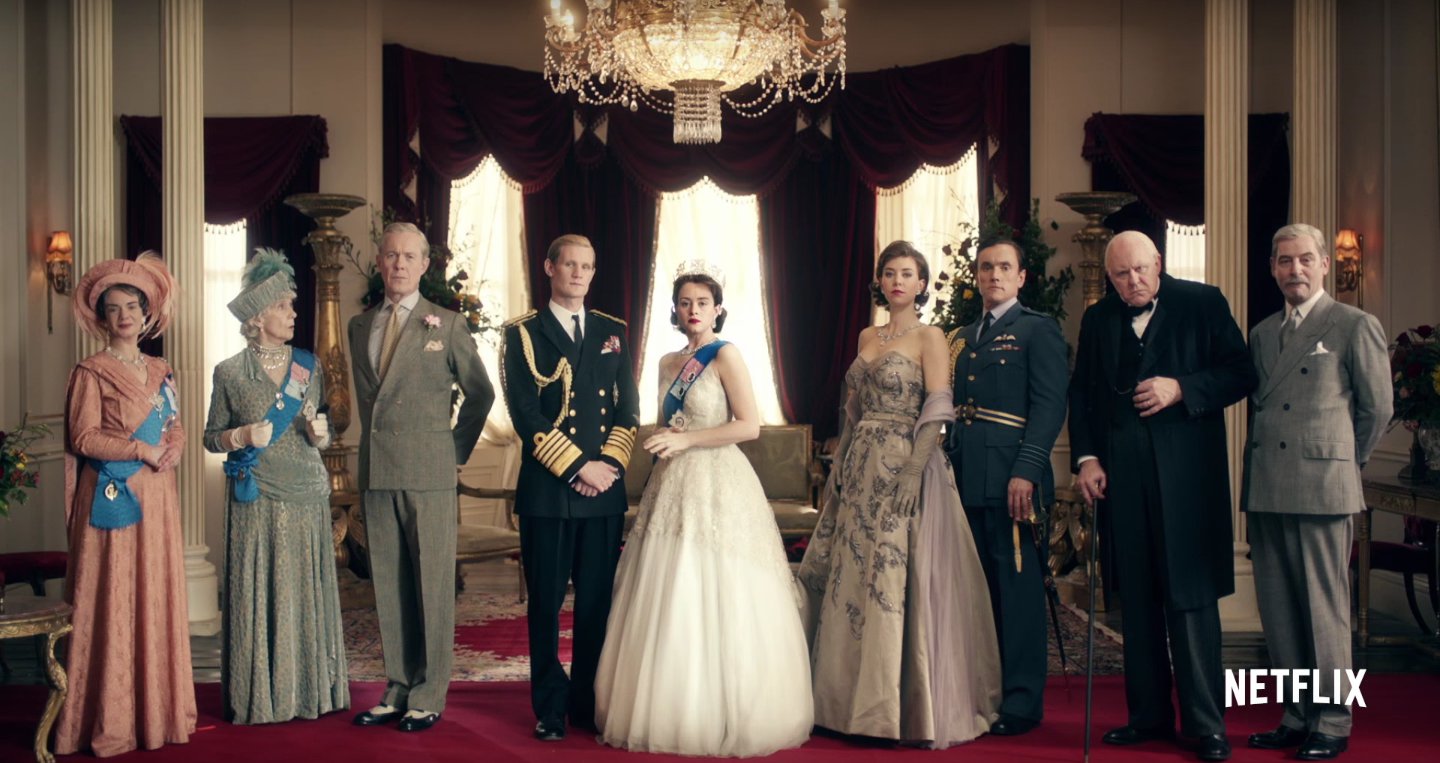
"The Crown"- Following the political rivalries and romance during Queen Elizabeth II's reign that shaped the late 20th century.  Queen Elizabeth II takes the throne and a new era is dawning on the British Empire.  Lady Macbeth shows jealousy toward the power that was appointed to Queen Elizabeth II, and is envious that she could never be awarded the same amount of power and respect.  It reveals the reason behind Lady Macbeth's manipulation of Macbeth to murder King Duncan, as her desire for some form of power.
"Black Mirror"- Each episode follows a different character in a new landscape in which technology has gone awry.  The character looses control over the technology that has taken control over their society. The psychological breakdown of the characters in the show is very similar to Lady Macbeth's breakdown.  Similar to Lady Macbeth losing control over Macbeth as he slips deep into inhumane evil, "Black Mirror" focuses on the character's downfall and reveals the psychological impacts the technology has on them.  Lady Macbeth sees Macbeth change in character as her fault, and the guilt of this consumes her and we see it manifest in her sleepwalking.

Sunday, December 4, 2016

The Power of Evil

People who are not "evil" take the first step towards evil because they believe that a small act of evil will not counter all the good they have done in their lives.  The first thing that is involved in walking "down the primrose path to the everlasting bonfire" (Macbeth, 2.3)  is a person being convinced or persuaded that the evil action is the right thing to do.  A person is also convinced that the action would be easy to forget and return to the life that they once had.  Guilt is the main internal consequences from an individual choosing evil.  An example of this is present in Shakespeare's Macbeth after Macbeth murders Banquo.  The ghost of Banquo is a manifestation of Macbeth's guilt and appears to him during the dinner to celebrate the life of Duncan.  This dinner is known as the turning point of the play, and we finally see how the actions of Macbeth directly impact him.

Sunday, November 13, 2016

Artwork in the Middle Ages


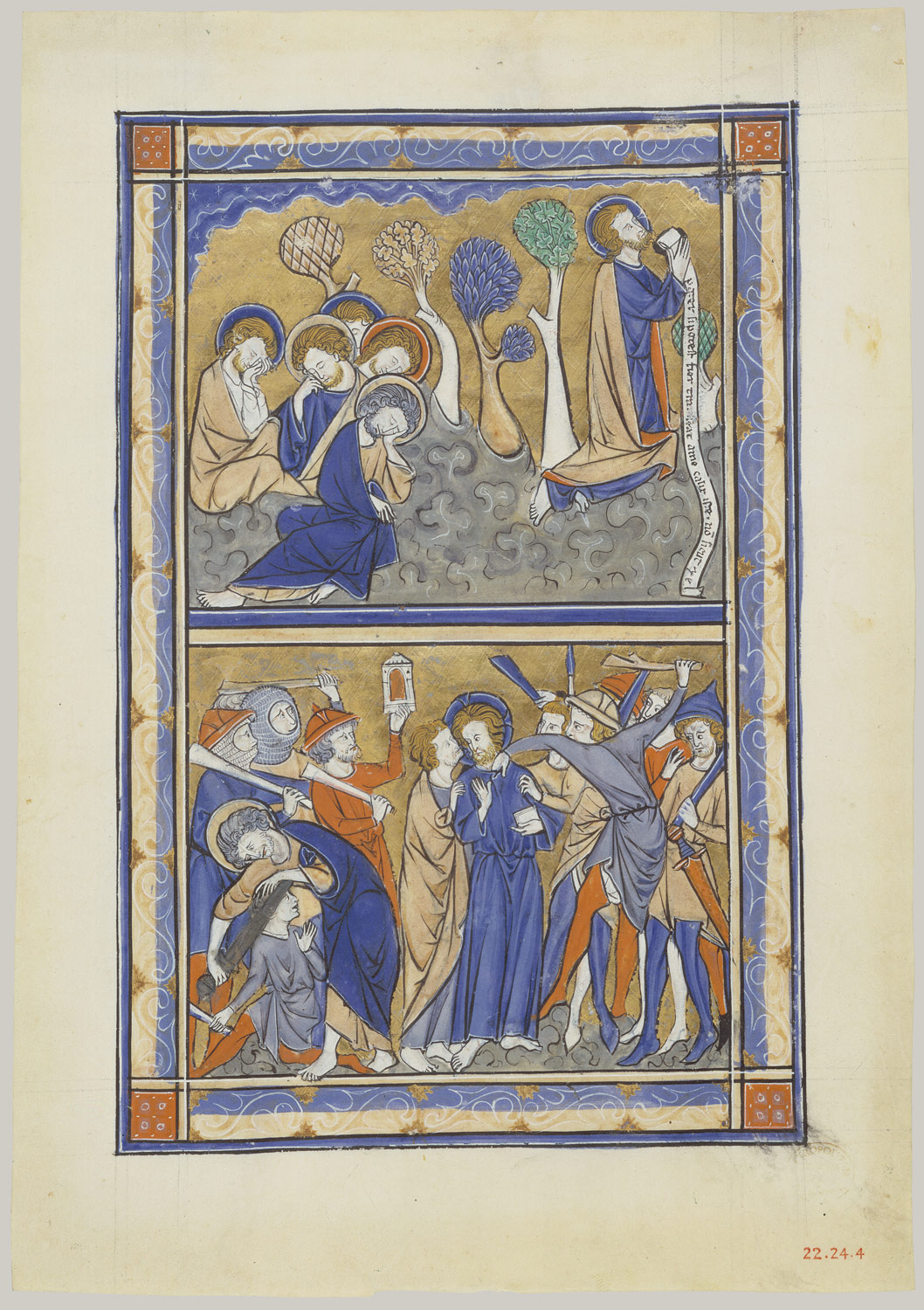
Title: Manuscript Leaf with the Agony in the Garden and Betrayal of ChristArtist: An English PsalterDate: 1270Medium: Tempera and gold on parchmentSize: 23.5 by 16.5 c.m.
The illustrated manuscript came from an English psalter, a book of psalms from the Old Testament.  It is believed that the manuscript was for Queen Eleanor of Provence, who became a nun in 1272 after the death of her husband, King Henry III.  The manuscript is divided horizontally into two panels to portray the idea of the artwork which are the events in Christ's life before his crucifixion.  The upper panel is the episode known as the Agony in the Garden, while the Betrayal of Christ is in the lower panel.  This separation of the two very pieces creates a sense of conflict and unity to show the Christian theme that good will defeat evil.
The scene of Agony in the Garden has a gentle mood to it due to the kneeling or sitting positions of Christ and his apostles. The the natural shapes of the trees and sky in the background have smoothed cured lines to influence the viewer into a tranquil state of mind.  Each of the apostles are holding their heads with the hands, and have their eyes closed.  The artist did this to convey the apostles' feelings of sadness towards Christ's upcoming crucifixion. The scene of the Betrayal of Christ has a mood of anger and violence due to the depiction of weapons and the standing body language of the majority of the figures in the image.  The illustrations features several different figures in a compact space, leading to the feeling of overwhelment to trigger the sense of anger and fear in the viewer.  The two very different moods in the illustrations create a sense of conflict.  However, the pieces are unified due the similar colors, and how the figures are drawn.  there is movement starting from the upper panel and then to the lower panel due to the vertical arrangement of the scenes, and the rectangular frame that separates the scenes horizontally.  
These elements contribute to the Christian theme that good will always defeat evil by having the scene of Agony in the Garden above the Betrayal of Christ.  This order also portrays the Christian ideals of showing kindness over anger and violence.  This work still had special relevance to viewers today, especially to those practicing a form of Christianity because it features very important scenes before Christ's crucifixion, a very important role in the religion.


Sunday, October 16, 2016

Gluttony in Advertising


This advertisement from IHOP was created in December of 2012 to promote their "All You Can Eat Pancake" day.  The creator of this advertisement wanted to reach an audience of breakfast lovers in the United States. The advertisement portrays gluttony through the phrase "Slather. Pour. Eat. Repeat." this motivates the audience to over-indulge themselves with as many pancakes as they can eat in one sitting.  In The Canterbury Tales, the Franklin is described as being custom to live pleasurable, which portrays the deadly sin of gluttony.  Chaucer uses these sins as well as physical abnormalities to characterize the social classes because of his personal feelings towards them.

The creator of the ad uses the visual aspect of the stack of pancakes with syrup dripping and butter on top to appeal towards the audiences' appetite.  Since most IHOP locations are located inside the United States, the association benefits from "All You Can Eat" campaigns because of the obesity problem within the United States.  The large stack of pancakes can also create a sense of competition among the audience because friends and family can compete to see who can eat the most pancakes, contributing to the aspect over over-indulgence. This advertisement is one of many that promotes the concept of "All You Can Eat" supporting the deadly sin of gluttony.