When I was young (well younger),
I was shy, and I was scared
I hid behind my father's legs,
afraid of anything that would break or chip away me.
When I was young (well younger),
I didn't know that it was okay to be different
I walked with my head hung low,
trying to blend in with the crowd.
Now,
I am resilient, and I am aware
I face my fears head on,
knowing that fear only has the power that I give it.
Now,
I see that everyone is different, that's what make us human
I dance in the streets,
without a care in the world of who sees.
Looking back on my life the biggest change I noticed that took place was my self-confidence. I used to be so afraid of people judging me if I said the wrong thing or acted the wrong way, so I kept everything bottled up in my head. What the IB program taught me is that no matter what thought was bouncing around in my head, it was okay to share it. The last two years of my life have been a true roller coaster, but I was lucky enough to be in an environment where everyone around me was riding the same ride. When ever we were were thrown into a loop, or jolted into a jagged turn, we just kept looking forward to when the ride would end, not really appreciating how it would make us stronger. Now when the cart is climbing the last hill, using the remainder of its energy, I hope that we will be ready for what ever comes, no matter how high or steep the drop. And when the ride is over I wish that we will realize how truly great it was.
Sunday, April 23, 2017

Sunday, April 2, 2017
Witty Whitman's Wonderful Writings
People always say that people with the sloppiest handwriting are often the people that have great intelligence. Looking at Whitman's notebook visually displays this great phenomenon. It is extremely difficult to read, or even make out some words in Whitman;s notebook because his slanted cursive handwriting is all over the notebook, with no clear organization, and several things are crossed out. This sloppy mess of a notebook is justified by my theory that Whitman did not care how clearly he was writing, he just wrote down something in this notebook whenever it came to him, before it left his memory. Also the pencil marks go from light to dark showing that Whitman took and wrote in this notebook whether he had a surface to write on or not. This also explains the strong connection the elements of nature had to inspire his poems.
Some of the words and short phrases that I could make out where "and you,""clouds of death," and "stuff you are made of." These few lines stood out to me that most because they we written on their own lines in Whitman's notebook, and they were in larger handwriting than the other lines surrounding them. Since they are larger, i think that these were the lines that Whitman started or ended some of his poems with, because the lines were at the top or the bottom of the page in his notebook.
Its noted that the images began to fill the pages of the notebook. What I noticed about the images were that they started to become more abstract and stranger in nature. The explanation that The New York Times give for these illustrations were that Whitman would pass his notebook around, usually in a bar, resulting in strange portraits of Whitman. The illustration of a figure with a skull and a heart pierced by a rapier is said to be "an allegory of America itself, poised in a strange halfway state, suspended between day and night, life and death." This allegory makes sense especially because Whitman compares America to a boat in bad weather. Now the hat that the figure in the illustration looks like Abraham Lincoln's famous top hat, and this could represent the influence that Lincoln had on Whitman and how Whitman may feel like he has to carry on that burden.
Some of the words and short phrases that I could make out where "and you,""clouds of death," and "stuff you are made of." These few lines stood out to me that most because they we written on their own lines in Whitman's notebook, and they were in larger handwriting than the other lines surrounding them. Since they are larger, i think that these were the lines that Whitman started or ended some of his poems with, because the lines were at the top or the bottom of the page in his notebook.
Its noted that the images began to fill the pages of the notebook. What I noticed about the images were that they started to become more abstract and stranger in nature. The explanation that The New York Times give for these illustrations were that Whitman would pass his notebook around, usually in a bar, resulting in strange portraits of Whitman. The illustration of a figure with a skull and a heart pierced by a rapier is said to be "an allegory of America itself, poised in a strange halfway state, suspended between day and night, life and death." This allegory makes sense especially because Whitman compares America to a boat in bad weather. Now the hat that the figure in the illustration looks like Abraham Lincoln's famous top hat, and this could represent the influence that Lincoln had on Whitman and how Whitman may feel like he has to carry on that burden.
Friday, March 17, 2017
American Pie
1. How would you describe the “American Dream?”
James Truslow Adams defines the "American Dream" as a "life should be better and richer and fuller for everyone, with opportunity for each according to ability or achievement" regardless of social class or circumstances of birth. I strongly agree with his perspective, the "American Dream" provides opportunities for individuals to grow and develop in order to create a 'good' life for themselves as well as their loves ones. The "American Dream" is not always easily obtainable for everyone, some "American Dreams" are easier to accomplish than others based on the person's advantages, and disadvantages that they are given.
2. What is your definition of wealth?
I define wealth differently than most, I concentrate on quality rather than quantity, and goes beyond a quantity of number. Wealth for me its not how many friends I have, or how many clubs or hobbies I'm involved in, instead it is in the nature of those friendships and extracurriculars. Wealth and value is found in how these friends or loved ones and extracurricular activities impact my life, the lessons they have taught me, and the memories that they have provided me with.
3. What are Americans’ attitudes toward wealth and poverty?
Americans' attitudes toward wealth and poverty are mostly materialistic. Only those who have a high income, and can afford certain goods and products are 'wealthy' and those who can not are 'poor'. Not only can these words describe the economic value of someone, but also the life that they were given. People that are 'fortunate' have everything handed to them, they do not necessarily have to prove them selves to establish their worth, or to accomplish their "American Dream". Those who are 'less fortunate' have to work hard, and constantly prove their value to others in order to accomplish their "American Dream."
4. What is your attitude toward wealth and poverty?
My attitude towards wealth and poverty is measured again by happiness and quality over quantity. You are considered a 'wealthy' person if your life is filled with people that cherish and care for you as much as you do for them, it is having people that you can depend on no matter what life throws your way. It also your attitude about life, people who are 'wealthy' have overcome multiple obstacles that stood in their way, have learned from their mistakes, and are courageous in their actions. I hope to be what I define as wealthy in my life, as I hope so do many others. Those that are 'poor' do not have to be living in poverty, or financially struggling in anyway, but are struggling emotionally. What is the point of the expensive things, if you have no one to share them with.
Thursday, March 2, 2017



Sunday, February 19, 2017
I Ain't Afraid of No IOC


*Mrs. Genesky, the recording would not properly upload, I sent an email to you*
Criterion A: 5, I would make sure that my comments are well-supported references from both the except and the text as a whole.
Criterion B: 4, I would focus more on the effect that the literary features have on the readers.
Criterion C: 3, I would focus more on my transitions between the introduction, the body paragraphs, and the conclusion. I would also make sure my conclusion is better thought out.
Criterion D: 3, Again I would try to explain my thoughts more coherently.
Sunday, February 5, 2017
Judging a Book by its Cover


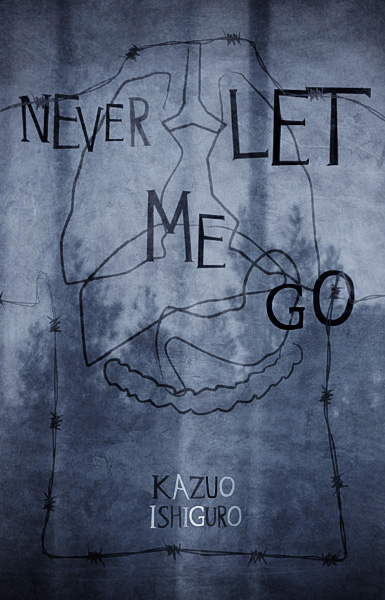
Although all four cover have visual differences, they are intended for the same novel, Never Let Me Go, by Kazuo Ishiguro. The visual differences of these book covers represent the content of the novel in different eye-catching ways. The first cover portrays the book as a romance due mainly to the girl's dreary posture and facial expression. The red shirt that the girl is wearing contrasts with the earthy green colors behind her. This leads the viewer's eyes to focus on her and associate the cover, and the title to be a love story. The second cover, however portrays the book as a coming of age story. The blurred image of the girl, shows the movement of spinning or dancing, usually something everyone does as kids. The contrasting bright colors of yellow and blue creates a happy, young, and full of life mood. The third cover chooses to portray the themes of loneliness and alienation in this novel. The dull color scheme, and lone rowboat in the lake intensify the mood of loneliness and isolation. Finally, the fourth cover portrays the novel as mysterious science fiction. The blueish-gray color scheme brings an element of fear that is not in the other covers. Harsh dark lines outline the title and human organs add a scientific element and creates an overall mysterious feel.
The reason behind the four different covers are to reach multiple audiences. The first cover appeals to the romantics, the second to the coming of age fanatics, the third to the deep philosophers, and the fourth to the thrill seeking science fiction fans.
- Words, and things that come to mind.
- (Left Cover) Broken hearted, hidden, and mistake
- (Right Cover) creepy, pain, and donor
- What would this image make you think the book was about?
- A teenager whose significant other is dying, or moving away and the couple is forced to break-up. However this is the teenage girl's first love, so she will never forget him, and as years pass, she often remembers them and vise versa.
- A dystopian society, where the government is using a group of people for experimentations, and the main character is discovering the truth about these experiments and tries to stop them.
- Who seems to be portrayed? Whose viewpoint?
- The teenage girl that is featured on the cover would be the narrator, and everything is through her viewpoint.
- A 'rebel' character, who is slowly discovering the truth about his/her government; told through their perspective.
- Does this image spark spark any ideas about the cultural construction of the book?
- Not really, I would imagine a 'normal' society, because there is nothing on the cover to dictate an abnormal society setting.
- Kind of, the cover really sets the mood that something is off, or not 'normal.' the blue-gray color scheme and dark letters and outline gives the sense that the story will take place in a dystopian science fiction setting.
- What kinds of people would make this book, and what kinds of people would read it?
- The person that wrote this book would have been like a John Green, because the author would not only focus on the romanic portion of the book, but also include deep philosophical thoughts, and a dash of humor. The audience for this book would definitely be teenage girls that were into the romance genre.
- The person that wrote this book would have been like a George Orwell, focusing on the technological portion on the dystopian society. The audience for this book would be fans of the science fiction or dystopian genres.
Saturday, January 21, 2017
Once Upon a Time...
Karen Thompson Walker: What fear can teach us
Read the transcript here.
Karen Thompson Walker compares human fears towards the components of stories. All stories involve characters, plots, imagery, and suspense. Our fears contain all of these aspects as well, in our fears we are the main character that goes through a sequence of suspense, that can create a vividly terrifying image in our imagination, and usually contain the questions of "what would happen?" and "what if?" Its human nature to not only think about the future but also worry about it. Karen Thompson Walker also mentions the case of the whale ship Essex, in which the crew was swayed by the artistic rather than the scientific temperament. When faced with the choice of possible cannibals and possible starvation, the crew decided against the idea that was most vivid to them, being eaten by cannibals, and chose the idea that appeared to be less vivid, slowly starving to death. Finally she makes the point that truest fears that we can experience are the ones that are slow and subtle.
The speaker, Karen Thompson Walker, tries to persuade her audience towards her way of thinking, that fears are nothing more than fictional stories, and can provide us with wisdom and insight about the truth. She accomplishes this through her use of ethos, logos, and pathos in her speech.
As a fictional writer, she uses her experience of writing her novel, The Age of Miracles, to how humans are able to think about the future, and how the future can bring up questions of fear. Since she is an experienced writer, the audience believes her correlation between the components of stories and fears to be true. The speaker also mentions famous novels like, The Origin of Species, Jane Eyre, and The Remembrance of Things Past to ensure her credibility as a well-educated, and successful author. This use of ethos allows the audience to trust the speaker's perspective because of her credibility as an author, and persuades the audiences towards her purpose.
Aside from using famous novels and authors, Karen Thompson Walker references to the whale ship, Essex, throughout her speech. The story of the ship and the crew inspired Herman Melville to write Moby Dick. She uses direct quotes from Herman Melville and Vladimir Nabokov to support her support her purpose of reading our fears in a more scientific temperament than an artistic one. Karen Thompson Walker also uses a study concerning "Productive Paranoia" to inform the audience that how they read, and studied the fear can help them prepare for their fears. This use of logos successfully supports the speaker's claims and contributes to a more persuasive, and convincing argument in her favor.
The story of the Essex also allows the audience to sympathize for the crew members that were placed in the tragic situation. Karen Thompson Walker adds to this emotional response form the audience by including a fear from her childhood, and including more common fears in her examples. As a child she feared the earthquakes that happened in California, and was always worried that "the Big One might strike while we were sleeping." The inclusion of her own fear makes the audience feel a personal connection with her, and creates a relatable, and sympathetic or empathetic mood in the audience. While describing the relationship between stories and fears, she uses common fears like, flying on a plane as an example to create that further understanding and connection between herself and the audience. The use of pathos in the speech allows this connection to reach the audience on a personal and emotional level that makes the speaker a relatable person. Due to this, the author seems very passionate about her beliefs concerning the subject of fear, which further persuades the audience to her purpose.
I decided to analyze this talk because fear has been a big aspect of my life. I have been questioning several things like, whether I'll get into my dream school or not, and where I'll attend college if I don't. I really connected to the speaker's point that "the most nuanced stories in literature are often the richest, so too might our subtlest fears be the truest" because I agree that the worst fears that you can face are the fears that are unexpected or that move very slowly. I also agreed with Karen Thompson Walker that how we read our fears determines what we can gain from them.
Sunday, January 8, 2017
Duality in Dr. Jekyll and Mr. Hyde
Characterization of Mr. Hyde:
"Mr. Utterson stepped out and touched him on the shoulder...he had unlocked the door and disappeared into the house." (Stevenson, 9-10)
Characterization of Dr. Jekyll:
"To this rule...This is a matter I thought we had agreed to drop." (Stevenson, 12-13)
Stevenson focuses on duality in this novella. He characterizes Mr. Hyde as an embodiment of pure evil through dark diction to not only describe Mr. Hyde's physical appearance, but also uses it in his dialogue. Dr. Jekyll is characterized as a well respected, prosperous doctor. These conflicting characters contribute to the overall mysterious tone of the novella. Mr. Hyde's dialogue is short and filled with cynical undertones, while Dr. Jekyll's dialogue is longer and well formulated. The development of the idea of duality in the novella, Jekyll states that that a human's soul is a battleground between 'good' and 'evil'. He hoped that the potion that he created would separate the good and the bad, but only brings out the bad through the character of Mr. Hyde.
Things Are Not Always What They Seem To Be
Dr. Jekyll: Surrounded by wealth and success, people think I'm grand.
Mr. Hyde: To the good doctor I am a helping hand.
Dr. Jekyll: The doors to the laboratory remain tightly shut.
Mr. Hyde: And I am the only one who holds the key.
Together: Things are not always what they seem to be.
Mr. Hyde: Mr. Utterson was his name, the one that interrogated me on the street.
Dr. Jekyll: Mr. Utterson came for a visit and questioned me about my assistant's past
Mr. Hyde: His eyes froze when he finally saw my face.
Dr. Jekyll: His eyes turned back to mine before he left the house.
Together: He is coming on to us, watching our every move.
Dr. Jekyll: Everyday is a fight between good and bad, I embrace the good,
Mr. Hyde: And I embrace the bad.
Dr. Jekyll: I can no longer control the potion's curse
Mr. Hyde: I have finally won.
Together: Things are not always what they seem to be.
Saturday, December 17, 2016
Top Picks for Lady Macbeth



Sunday, December 4, 2016
The Power of Evil
People who are not "evil" take the first step towards evil because they believe that a small act of evil will not counter all the good they have done in their lives. The first thing that is involved in walking "down the primrose path to the everlasting bonfire" (Macbeth, 2.3) is a person being convinced or persuaded that the evil action is the right thing to do. A person is also convinced that the action would be easy to forget and return to the life that they once had. Guilt is the main internal consequences from an individual choosing evil. An example of this is present in Shakespeare's Macbeth after Macbeth murders Banquo. The ghost of Banquo is a manifestation of Macbeth's guilt and appears to him during the dinner to celebrate the life of Duncan. This dinner is known as the turning point of the play, and we finally see how the actions of Macbeth directly impact him.
Sunday, November 13, 2016
Artwork in the Middle Ages
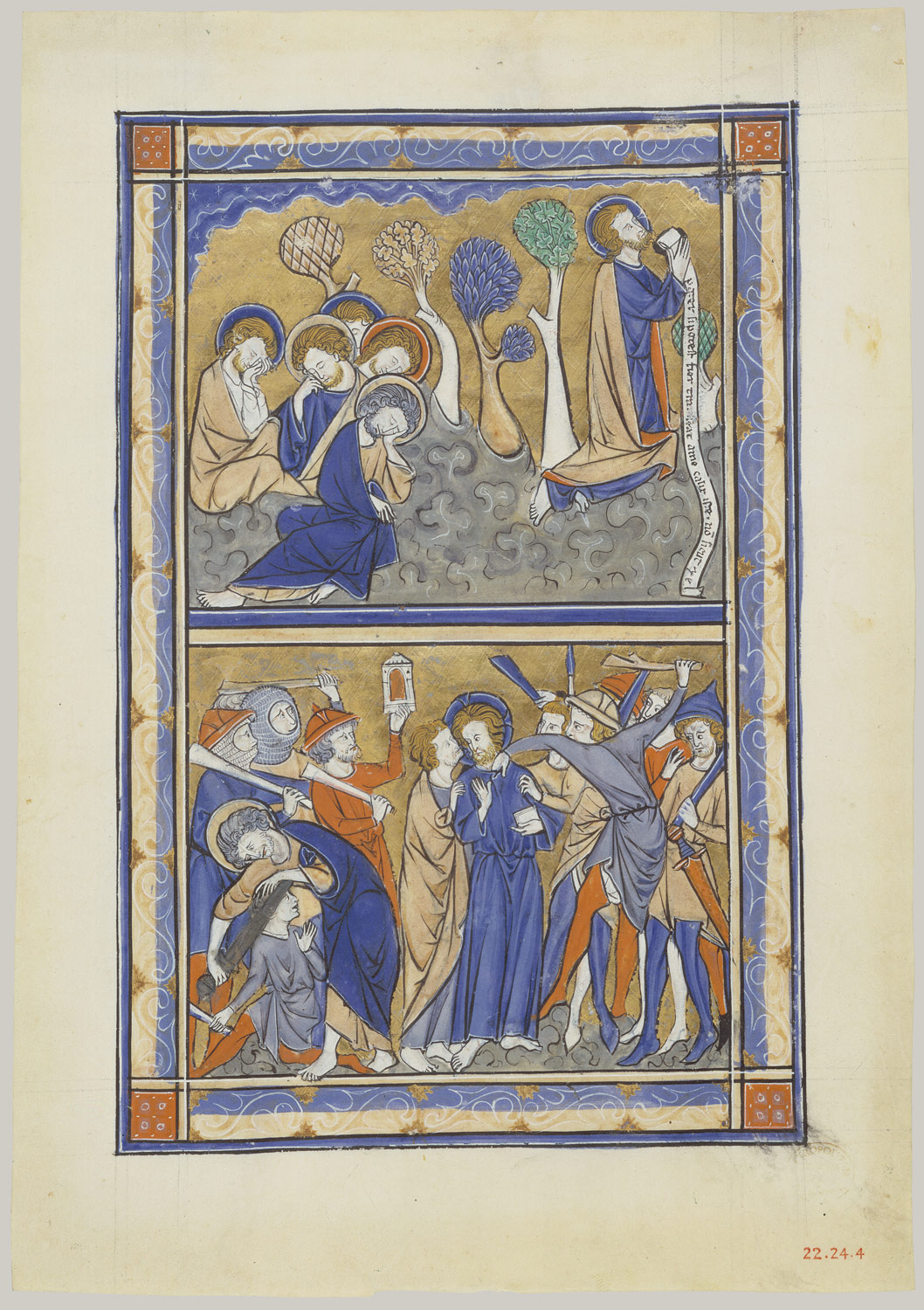

Title: Manuscript Leaf with the Agony in the Garden and Betrayal of ChristArtist: An English PsalterDate: 1270Medium: Tempera and gold on parchmentSize: 23.5 by 16.5 c.m.
The illustrated manuscript came from an English psalter, a book of psalms from the Old Testament. It is believed that the manuscript was for Queen Eleanor of Provence, who became a nun in 1272 after the death of her husband, King Henry III. The manuscript is divided horizontally into two panels to portray the idea of the artwork which are the events in Christ's life before his crucifixion. The upper panel is the episode known as the Agony in the Garden, while the Betrayal of Christ is in the lower panel. This separation of the two very pieces creates a sense of conflict and unity to show the Christian theme that good will defeat evil.
The scene of Agony in the Garden has a gentle mood to it due to the kneeling or sitting positions of Christ and his apostles. The the natural shapes of the trees and sky in the background have smoothed cured lines to influence the viewer into a tranquil state of mind. Each of the apostles are holding their heads with the hands, and have their eyes closed. The artist did this to convey the apostles' feelings of sadness towards Christ's upcoming crucifixion. The scene of the Betrayal of Christ has a mood of anger and violence due to the depiction of weapons and the standing body language of the majority of the figures in the image. The illustrations features several different figures in a compact space, leading to the feeling of overwhelment to trigger the sense of anger and fear in the viewer. The two very different moods in the illustrations create a sense of conflict. However, the pieces are unified due the similar colors, and how the figures are drawn. there is movement starting from the upper panel and then to the lower panel due to the vertical arrangement of the scenes, and the rectangular frame that separates the scenes horizontally.
These elements contribute to the Christian theme that good will always defeat evil by having the scene of Agony in the Garden above the Betrayal of Christ. This order also portrays the Christian ideals of showing kindness over anger and violence. This work still had special relevance to viewers today, especially to those practicing a form of Christianity because it features very important scenes before Christ's crucifixion, a very important role in the religion.
Sunday, October 30, 2016
Sunday, October 16, 2016
Gluttony in Advertising

This advertisement from IHOP was created in December of 2012 to promote their "All You Can Eat Pancake" day. The creator of this advertisement wanted to reach an audience of breakfast lovers in the United States. The advertisement portrays gluttony through the phrase "Slather. Pour. Eat. Repeat." this motivates the audience to over-indulge themselves with as many pancakes as they can eat in one sitting. In The Canterbury Tales, the Franklin is described as being custom to live pleasurable, which portrays the deadly sin of gluttony. Chaucer uses these sins as well as physical abnormalities to characterize the social classes because of his personal feelings towards them.
The creator of the ad uses the visual aspect of the stack of pancakes with syrup dripping and butter on top to appeal towards the audiences' appetite. Since most IHOP locations are located inside the United States, the association benefits from "All You Can Eat" campaigns because of the obesity problem within the United States. The large stack of pancakes can also create a sense of competition among the audience because friends and family can compete to see who can eat the most pancakes, contributing to the aspect over over-indulgence. This advertisement is one of many that promotes the concept of "All You Can Eat" supporting the deadly sin of gluttony.
Sunday, October 2, 2016
What's in a Name?
My first name, "Kristen" was chosen from a heavy influence from my father. He is a service manager, and while meeting with a customer, he stumbled upon a "Kristen" that worked for his customer. After briefly talking to her, he found how well-educated, responsible, and respectful she was. These characteristics appeared within every "Kristen" he met from then on. When I was born, he wanted me to follow the path of the other "Kristen"s that he met. Even though my name does not define who I am, it correlates to it. Just because my name is "Kristen", it does not automatically give me the characteristics associated with the name. The decisions and actions I do in my life are tied to my name, when others talk about me they associate the name the hear to my actions and personality.
I have had situations which I have been a "two," when I am an individual, but part of a whole at the same time. Since I have an older brother, others have perceived me as the same person that he is. Teachers that have previously had him as a student, were influenced by how he acted and use that to judge me before they get to know me. Although we have some similarities, our differences is what make us individuals. Teachers that have not had my brother see me as an individual rather than as apart of a whole, because they have gotten to know me and my individual personality.
Sunday, September 18, 2016
Concept of Othering
Wing Young Huie's photo, "Schalmer Flying Horse," taken in 2001 features a woman sitting alone on a public bus or subway. The women is the focus of the image, which creates emphasis and contrast between her and the blurred bodies that stand in the foreground. Contrast is also created from the picture being black and white, the woman's shirt is a pure white against the dark black seats. The artist captured the feeling of loneliness, which is communicated through her facial expression. The concept of "othering" is present in this photograph since the woman in focus is in the background of the image, which creates a sense that she is separated or alienated from the rest of the crowd. Huie furthers this concept by having the focus of the image, dressed in white, surrounded by two blurred figures, dressed in darker clothing, again creating the sense of separation.
Simular to Huie's photograph, "Schalmer Flying Horse," Margaret Atwood's novel, The Handmaid's Tale, also captures the concept of "othering." Atwood creates this concept through gender stereotypes, by the creation of the different classes. Women were assigned as Wives, Handmaids, Marthas, Econowives, or "unwomen." Women that could bear children became Handmaids, while those who could not became Marthas. Those who revolted against the new society became "unwomen" and forced to do manual labor. The use of the neologism, "unwomen," captures the concept of "othering" because the "unwomen" were separated from the rest of Gilead's society. The different classes were divided by colors and rules that banned certain behavior among the classes creating a division amongst the population and furthers the concept of "othering" throughout Atwood's novel.
Subscribe to:
Posts (Atom)